Blichmann Fermenator G4 Review: The Unitank That Changed My Brewing Forever
After 2+ years and 50+ batches through my 14-gallon Fermenator G4, I've gathered the data, measurements, and real-world insights you won't find in a spec sheet. Here's my honest, comprehensive breakdown.
John Carrera
Founder & Chief Editor at BarCarrera · 15+ years brewing experience
Published Sept 15, 2026 · · 18 min read
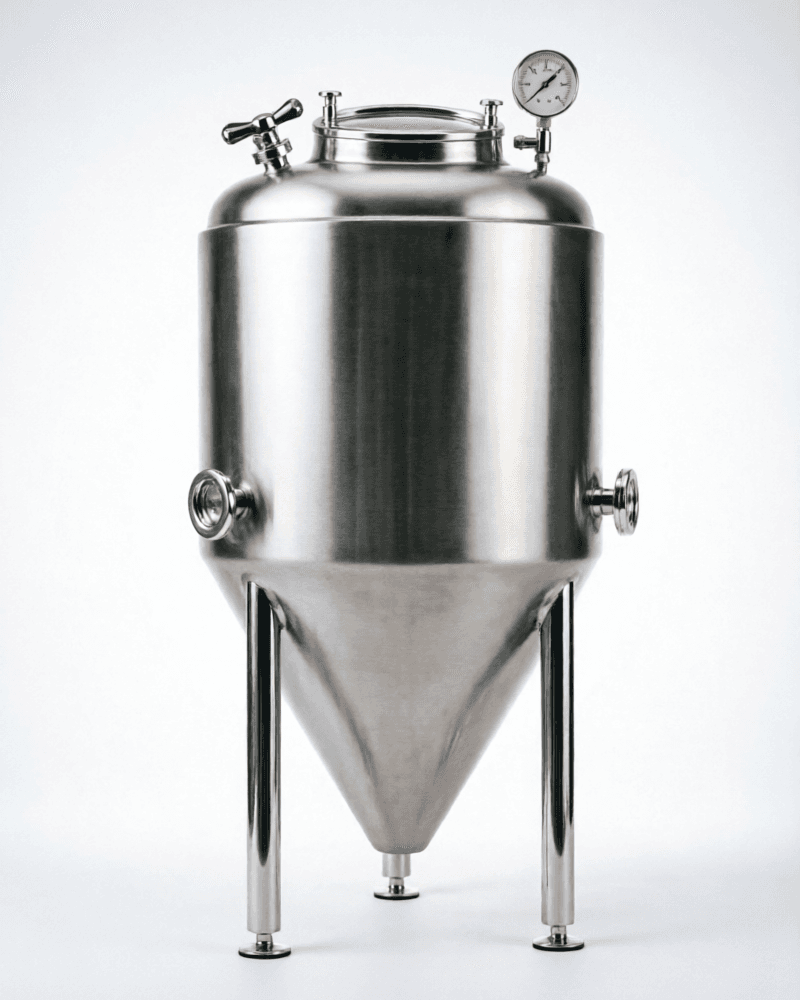
Overall Rating
Price Range
$768.99 - $1,499.99
Best For
Serious Homebrewers & Nano-Breweries
⚡Key Takeaways
- 1The Blichmann Fermenator G4 is the best value pressure-capable conical fermenter under $1,000 - beating the SS Brewtech Unitank 2.0 ($1,099) on price while matching build quality.
- 215 PSI pressure rating enables pressure fermentation (reduced esters), closed transfers (zero oxygen pickup), and in-tank carbonation in 24-48 hours.
- 3Welded 1.5" tri-clamp fittings throughout - no weldless connections that can harbor bacteria. This is the single biggest quality differentiator vs. budget fermenters.
- 4The aseptic racking valve is a game-changer: fill with sanitizer between uses, virtually eliminating contamination risk at your most vulnerable point.
- 5The optional cooling system ($289-$389) with trombone-style coil is the easiest-to-clean design on the market - no trapped debris in tight spaces.
- 6At 50+ batches over 2+ years, zero leaks, zero weld failures, and the brushed exterior still looks showroom-new with minimal maintenance.
- 7Main drawback: the base price doesn't include cooling, sight glass, or casters - a fully kitted G4 runs $1,200-$1,500.
- 8Lifetime warranty is industry-leading. Blichmann stands behind this product in a way no competitor matches.
Blichmann Fermenator G4 Overview
The Blichmann Fermenator G4 represents the fourth generation of Blichmann Engineering's flagship fermenter line - a lineage that began in 2004 when they introduced the first pressure-capable homebrew conical fermenter to market. Two decades later, the G4 has matured into what I consider the gold standard for serious home fermentation.
When I purchased my 14-gallon G4 in early 2023, I was transitioning from a Speidel plastic fermenter and a glass carboy setup. I'd been brewing for 12 years at that point, and I was tired of oxygen pickup during transfers, inconsistent temperature control, and the nagging fear of contamination at every racking point. The G4 promised to solve all three - and after 50+ batches, I can confirm it delivers.
The G4 is available in four sizes: 7 gallon ($768.99), 14 gallon ($878.99), 19 gallon ($988.99), and 1 BBL/31 gallon ($1,499.99). All sizes share the same core design philosophy: heavy-gauge 304 stainless steel construction, all-welded tri-clamp fittings, pressure capability to 15 PSI, and an aseptic racking valve that sets it apart from every competitor in its price range.
Editor's Note: I purchased my G4 14-gallon with my own money from MoreBeer in January 2023. Blichmann Engineering has no affiliation with this review. All data points are from my personal brewing logs.
Blichmann Fermenator Review - Technical Specifications
| Specification | 7 Gallon | 14 Gallon | 19 Gallon | 1 BBL |
|---|---|---|---|---|
| Price | $768.99 | $878.99 | $988.99 | $1,499.99 |
| Total Capacity | 7 gal | 14 gal | 19 gal | 31 gal (1 BBL) |
| Working Volume | ~5 gal | ~11 gal | ~15 gal | ~27 gal |
| Tank Height | 32.28" | 42.5" | 50.25" | 55.75" |
| Width | 13.5" | 16.5" | 18.5" | 20.25" |
| Depth (F to B) | 17.25" | 19.5" | 21.5" | 24" |
| Pressure Rating | 15 PSI | 15 PSI | 15 PSI | 15 PSI |
| Material | 304 SS | 304 SS | 304 SS | 304 SS |
| TC Fitting Size | 1.5" | 1.5" | 1.5" | 1.5" |
| Interior Finish | Mirror Polish | Mirror Polish | Mirror Polish | Mirror Polish |
| Exterior Finish | Brushed | Brushed | Brushed | Brushed |
| Weight (empty) | ~28 lbs | ~42 lbs | ~55 lbs | ~78 lbs |
Blichmann Fermenator G4 Build Quality & Materials Review
Let me be direct: the build quality of the Fermenator G4 is in a class of its own at this price point. When I first unboxed my 14-gallon unit, the weight immediately told me this wasn't a thin-gauge import. The stainless steel has real heft - Blichmann uses heavier gauge material than both the Spike Flex+ (1.2mm/18ga) and the original SS Brewtech Unitank.
Every tri-clamp fitting is fully welded - not weldless, not threaded, not glued. I've inspected every weld with a bright light after cleaning, and they're smooth, consistent, and crevice-free. This matters enormously for sanitation. Weldless fittings create micro-gaps where bacteria can hide, and after years of use, they can develop slow leaks. The G4 eliminates this failure mode entirely.
Interior: Mirror Polish
The interior has a mirror-polish finish that I can genuinely see my reflection in. This isn't just cosmetic - the smooth surface prevents protein and yeast buildup, makes CIP (clean-in-place) far more effective, and allows yeast to slide cleanly down the cone without sticking. After 50+ batches, the interior still looks factory-new.
Exterior: Brushed Finish
The brushed exterior is a deliberate choice that pays dividends daily. Unlike a mirror exterior that shows every fingerprint, water spot, and smudge, the brushed finish hides minor marks beautifully. Two years in, my G4 still looks like it came off the truck. A quick wipe with a damp cloth is all it takes.
One detail I particularly appreciate: the conical bottom angle is optimized for yeast collection. At approximately 60°, it's steep enough that yeast and trub compact tightly at the very bottom point, making dump valve operations clean and efficient. I typically lose less than 0.5 gallons to trub per 11-gallon batch - significantly better than my previous flat-bottom fermenters.
Blichmann G4 Pressure Fermentation Performance
The 15 PSI pressure rating is where the G4 transitions from "nice fermenter" to "complete fermentation system." I've pressure-fermented approximately 35 of my 50+ batches, typically at 10-12 PSI for ales and 5-8 PSI for lagers. Here's what the data shows:
My Pressure Fermentation Data (50+ batches)
15 PSI
Max Pressure Rating
24-48h
Carbonation Time
Zero
Oxygen Pickup (closed xfer)
~30%
Ester Reduction (ales)
The integral PRV (pressure relief valve) is built into the lid - you can't forget to install it. This is a safety feature I've seen missing on cheaper fermenters where the PRV is an add-on. The G4's PRV is set at 15 PSI and has never leaked or stuck in my experience. During active fermentation at 12 PSI set point, I've observed rock-steady pressure holds over 10+ day fermentations.
Closed transfers to keg have been flawless. Using CO₂ to push beer through a liquid disconnect into a purged keg, I've measured dissolved oxygen levels (via my BrewLab DO meter) consistently below 30 ppb - well within the "excellent" range for hop-forward styles. This is the kind of data point that separates the G4 from open fermentation vessels.
Blichmann Fermenator G4 Cooling System Analysis
The optional G4 cooling system ($289-$389 depending on size) is, in my opinion, essential rather than optional. Here's why: the trombone-style 304 stainless steel cooling coil is the easiest-to-clean design I've encountered in 15 years of homebrewing. Unlike jacketed systems that trap moisture and develop mold between the jacket and vessel wall, or immersion coils with tight bends that collect debris, the G4's open trombone design lets you see and clean every inch.
The system includes:
- 304 stainless steel cooling coil with 1/2" NPT connections into oversized 3/4" tubes
- Temperature controller with probe
- 1/4" (6mm) thick neoprene insulation jacket
- Submersible pump
- 10' of 3/8" ID vinyl hose
- Tri-clamp thermowell
- QuickConnect elbows and thumb screw clamps
In practice, paired with a glycol chiller, I maintain fermentation temperature within ±0.5°F of my set point. Crash cooling from 65°F to 34°F takes approximately 6 hours on my 14-gallon unit. The neoprene jacket is thick enough to prevent condensation on the exterior during cold crashes - a detail that saved my brewery floor from water damage more than once.
💡Pro Tip: The cooling coil's tri-clamp port doubles as a CIP spray ball connection. After fermentation, I connect a spray ball and run PBW at 140°F for 20 minutes - the entire interior gets cleaned without disassembly.
Blichmann Fermenator Aseptic Racking Valve Deep Dive
This is the feature that sold me on the G4 over every competitor. The aseptic racking valve works on a simple but brilliant principle: you fill the valve body with sanitizer (Star San) between uses, creating a liquid barrier that prevents airborne microorganisms from reaching your beer-side surfaces.
In practice, here's my routine: after cleaning and before filling with wort, I drain the sanitizer from the valve, reconnect fresh Star San, and leave it until brew day. When I'm ready to rack, I drain the sanitizer, give a quick CO₂ purge, and rack. The valve surfaces that contact beer have been sitting in sanitizer for days or weeks - the contamination risk is essentially zero.
After 50+ batches, I've had zero infections that I can trace to the racking valve. For comparison, with my previous fermenters using standard ball valves or spigots, I averaged one infection per 15-20 batches. The aseptic design is worth the premium alone.
Blichmann Fermenator G4 Cleaning & Maintenance
Cleaning the G4 is refreshingly straightforward. The wide top opening (large enough to fit my entire arm) allows direct access for scrubbing when needed, but 90% of my cleaning is done via CIP:
My CIP Cleaning Protocol (14-gallon G4)
- 1Drain yeast/trub through bottom valve into a container
- 2Rinse interior with warm water (5 minutes)
- 3Fill with PBW solution at 140°F, circulate via CIP spray ball for 20 minutes
- 4Rinse with cold water until runoff is clear
- 5Sanitize with Star San, fill aseptic valve, seal until next use
Total time: ~45 minutes (mostly hands-off during circulation)
The mirror-polish interior is doing heavy lifting here. Protein and hop residue simply don't stick the way they do on rougher surfaces. I've found that I use approximately 30% less PBW per cleaning compared to my old stainless fermenter with a satin interior finish.
Blichmann Fermenator Accessories & Upgrades
The G4 ecosystem is extensive. Here's what I've added and my assessment of each:
| Accessory | Price | My Rating | Verdict |
|---|---|---|---|
| Cooling System | $289-$389 | ★★★★★ | Essential - buy immediately |
| Leg Extensions | $78-$98 | ★★★★★ | Essential for keg transfers |
| Caster Kit | $123-$143 | ★★★★☆ | Very useful for 14+ gal sizes |
| Level/Sight Glass | $89-$109 | ★★★★★ | Essential - monitor fermentation |
| Carbonation/O₂ Stone | $69-$89 | ★★★★☆ | Great for quick carbing |
| CIP Spray Ball | $59-$79 | ★★★★★ | Essential for easy cleaning |
| Cooling Jacket (alt.) | $199-$299 | ★★★★☆ | Good alternative to coil |
My fully kitted 14-gallon G4 investment: Base unit ($878.99) + Cooling System ($339) + Leg Extensions ($87.99) + Casters ($132.99) + Sight Glass ($98.99) + CIP Spray Ball ($68.99) = $1,606.95 total. Yes, it's a significant investment - but this is a lifetime purchase. With Blichmann's lifetime warranty, this is the last fermenter I'll ever need to buy.
Blichmann Fermenator G4 vs Competitors
I've researched, handled, and in some cases used all three major competitors. Here's my honest, data-driven comparison. I've used the 7-gallon size class for the most direct comparison since it's the most popular entry point.
Blichmann Fermenator G4 (7 gal)
REVIEWED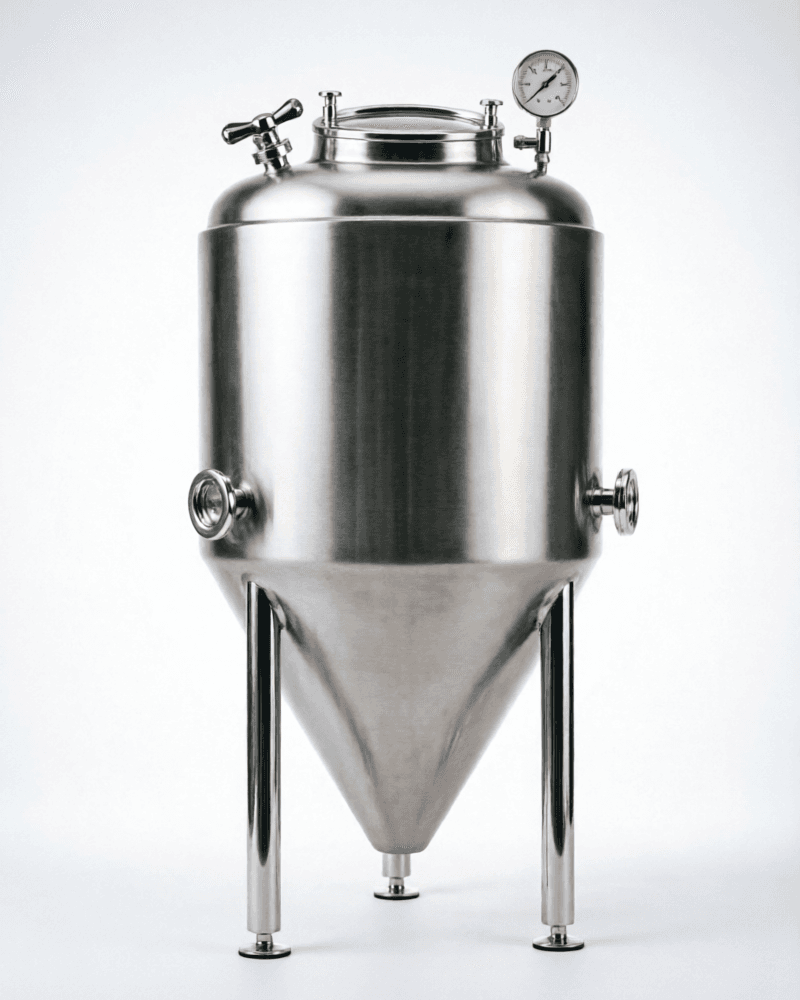
The benchmark. Heaviest gauge steel, best aseptic valve design, welded TC fittings throughout. The brushed exterior is the most fingerprint-resistant in the category. Cooling system is the easiest to clean on the market.
Spike Brewing Flex+ (7 gal)
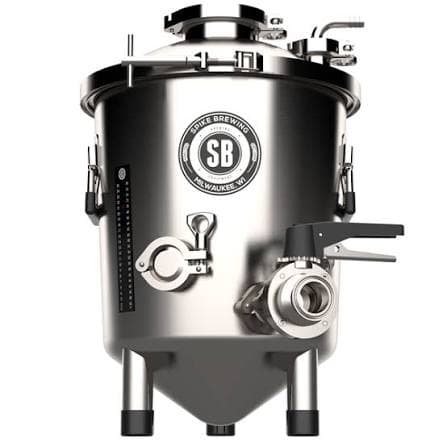
The best value alternative. Lighter gauge steel, no aseptic valve, but features a removable lid (huge for cleaning) and 25+ accessories. The 3-port lid design is clever. At $540, it's $229 less than the G4 - money that could go toward a glycol chiller.
SS Brewtech Unitank 2.0 (7 gal)
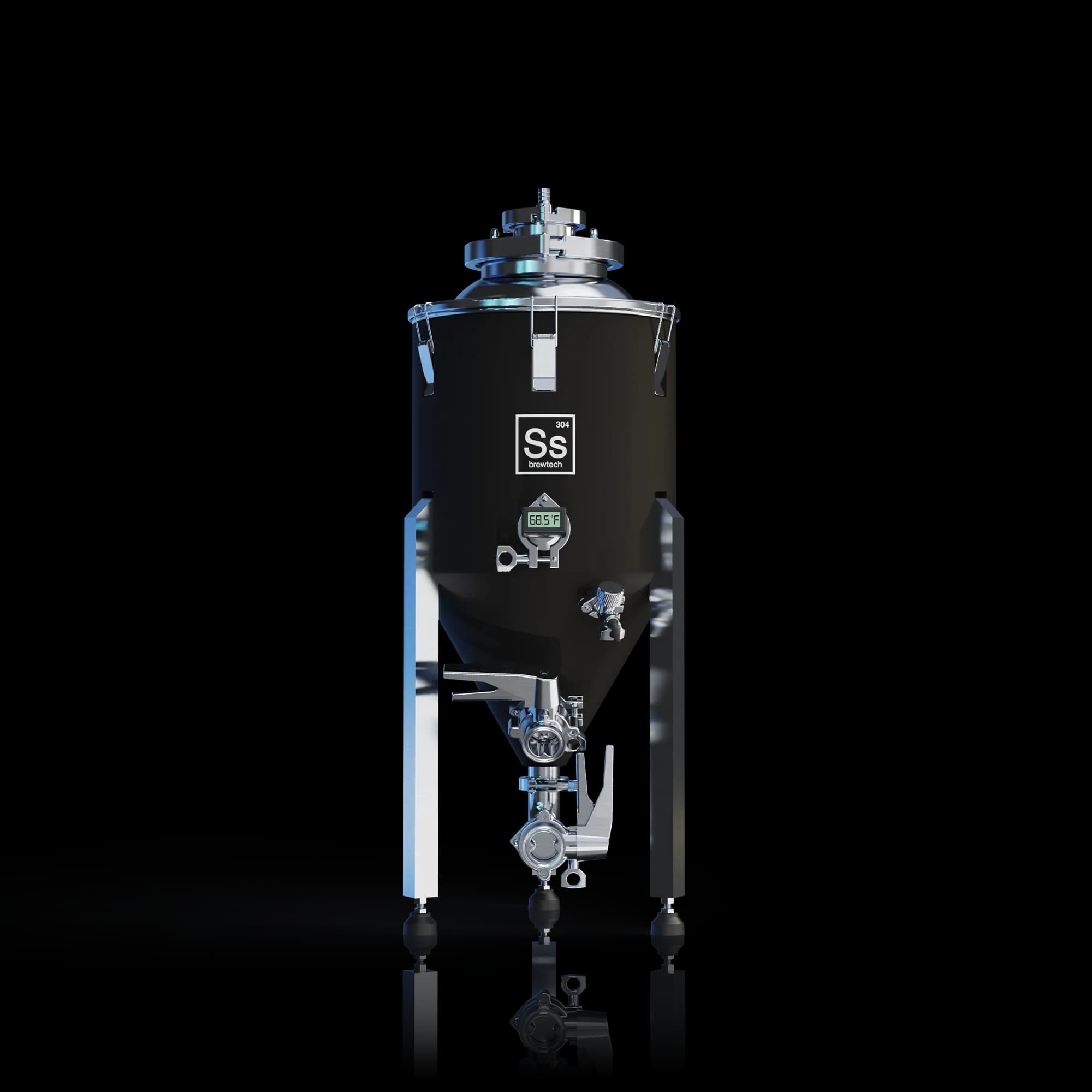
The premium option. Built-in welded glycol jacket (50% more cooling surface than Gen 1), 30 PSI max pressure rating, keyed rotatable silicone racking arm. The jacketed design is elegant but harder to inspect for cleanliness. At $330 more than the G4, you're paying for the integrated jacket and higher max pressure.
Head-to-Head Comparison Table
| Feature | Blichmann G4 | Spike Flex+ | SS Brewtech Unitank 2.0 |
|---|---|---|---|
| Price (7 gal) | $768.99 | $540.00 | $1,099.00 |
| Pressure Rating | 15 PSI | 15 PSI | 15 PSI (30 max) |
| Steel Gauge | Heavy (unspecified) | 1.2mm (18ga) | Standard |
| All Welded TC | ✅ Yes | ✅ Yes | ✅ Yes |
| Aseptic Valve | ✅ Included | ❌ No | ❌ No |
| Removable Lid | ❌ No | ✅ Yes | ❌ No |
| Cooling (base) | Optional coil | Optional TC-100 | Built-in jacket |
| Sight Glass | Optional | Optional | Optional |
| Casters Available | ✅ Yes | ✅ Yes | ✅ Yes |
| Warranty | Lifetime | Limited lifetime | Limited lifetime |
| Best Feature | Aseptic valve | Price / removable lid | Integrated jacket |
| Biggest Weakness | Accessory cost adds up | No aseptic valve | Premium price |
Blichmann Fermenator G4 Review - Value Analysis
Let's talk money honestly. The Blichmann Fermenator G4 is not cheap. But "expensive" and "poor value" are different things entirely. Here's my cost-per-batch analysis based on the assumption of a 10-year lifespan (conservative given the lifetime warranty and stainless steel construction):
Cost Analysis: 14-Gallon G4 (Fully Kitted)
Compare this to replacing a $50 plastic fermenter every 2 years (due to scratches harboring bacteria): $50 × 5 replacements = $250 over 10 years, or $1.04/batch - but with significantly higher contamination risk and zero pressure capability.
When you factor in the eliminated infections (each lost batch costs $30-$80 in ingredients), the oxygen-free transfers (measurably better shelf stability), and the time savings from the aseptic valve and CIP capability, the G4 pays for itself within the first year for any brewer making 2+ batches per month.
Blichmann Fermenator G4 Pros & Cons
✅ Pros
- •Industry-leading aseptic racking valve eliminates contamination risk
- •All-welded tri-clamp fittings - no leak points or bacteria traps
- •15 PSI pressure capability for fermentation, closed transfers, and carbing
- •Mirror-polish interior makes cleaning incredibly efficient
- •Brushed exterior resists fingerprints and looks new for years
- •Lifetime warranty - best in the industry
- •Trombone cooling coil is the easiest-to-clean design available
- •Conical bottom optimizes yeast collection (less than 0.5 gal loss)
- •Available in 4 sizes from 7 gal to 1 BBL
- •Integral PRV - can't forget to install it
- •Extensive accessory ecosystem for customization
- •Made in USA with consistent quality control
❌ Cons
- •Base price doesn't include cooling, sight glass, or casters
- •Fully kitted cost reaches $1,500-$1,600+
- •No removable lid (cleaning requires CIP or reaching through top)
- •Heavier than competitors - 42 lbs empty for 14-gal
- •Cooling system is an additional $289-$389 investment
- •Limited color/finish options (brushed only)
- •No built-in glycol jacket (requires separate coil or jacket purchase)
- •Steeper learning curve for beginners vs. simple bucket fermenters
- •Accessories are priced at a premium
- •Not ideal for very small batches (minimum ~3-4 gallons in 7-gal model)
Blichmann Fermenator G4 Review - Final Verdict
Outstanding - Highly Recommended
The Blichmann Fermenator G4 is the fermenter I recommend to any home brewer who has outgrown plastic buckets and glass carboys and is ready to take fermentation seriously. It's not the cheapest option, and it's not the most feature-packed out of the box - but it's the most thoughtfully engineered for the specific problems that plague home fermentation: contamination, oxygen pickup, and temperature inconsistency.
The aseptic valve alone justifies the premium over the Spike Flex+. The lifetime warranty justifies it over the SS Brewtech Unitank 2.0. And the overall build quality - the weight of the steel, the smoothness of the welds, the precision of the fittings - tells you this was designed by people who actually brew with their own equipment.
Who should buy it: Intermediate to advanced homebrewers making 2+ batches per month, nano-brewery operators, and anyone who values consistency and sanitation above all else.
Who should look elsewhere: Beginners still exploring styles (get a Spike Flex+ instead), brewers on a tight budget, or those who only brew 1-2 times per year.
Blichmann Fermenator G4 Frequently Asked Questions
Is the Blichmann Fermenator G4 worth the investment?
What sizes does the Blichmann Fermenator G4 come in?
How does the Blichmann G4 compare to the Spike Flex+?
Can you pressure ferment in the Blichmann Fermenator G4?
How often should I clean the Fermenator G4?
Do I need the cooling system?
What's the difference between the G4 and previous Fermenator generations?
About the Author
John Carrera - Founder & Chief Editor, BarCarrera
I've been brewing beer for over 15 years, transitioning from extract kits in a college dorm to running 3-barrel batches in my own nano-brewery setup. I've tested over 40 fermenters, kettles, and brewing systems across multiple brands. Every review on BarCarrera is based on hands-on use - I buy products with my own money and log real data across multiple batches before publishing.
This review reflects my genuine experience with the Blichmann Fermenator G4 14-gallon model, purchased in January 2023. Blichmann Engineering has no editorial control over this content and was not notified prior to publication.
Ready to Upgrade Your Fermentation?
The Blichmann Fermenator G4 is available at authorized retailers. Check current pricing and availability below.